The Landscape in 2026
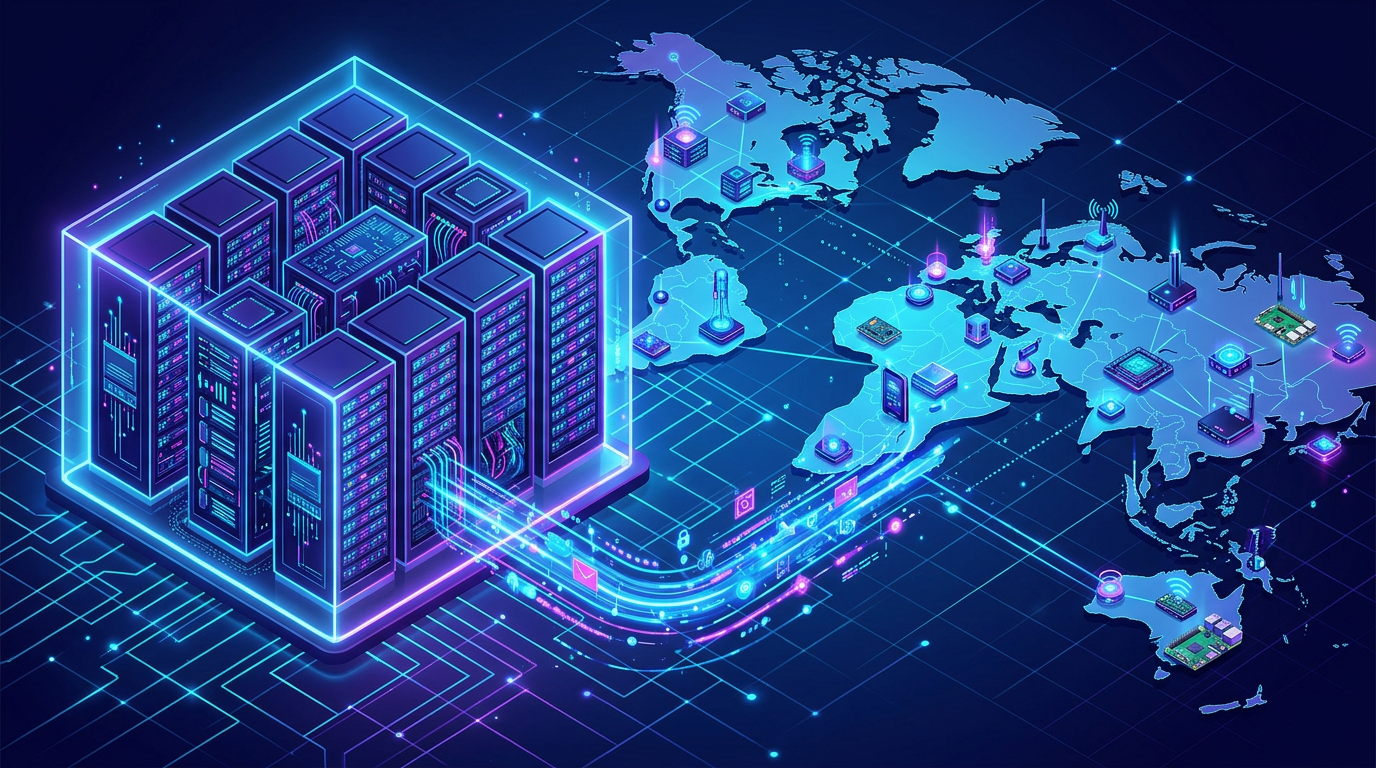
The "cloud solves everything" narrative has matured. Edge computing has moved from promise to operational reality: recent estimates show 34% of Kubernetes deployments now run on edge devices, from Raspberry Pi clusters to NVIDIA Jetson boards, using lightweight distributions like K3s.
Meanwhile, traditional serverless functions face direct competition from WebAssembly (Wasm) at the edge, with 9x faster cold starts and 2x faster execution speeds.
"Edge and cloud are no longer alternatives — they are endpoints of the same continuum that must be managed under a unified control plane."
When to Choose Edge Computing
1. Critical Latency (Sub-10ms)
If your application requires single-digit millisecond responses, edge is the only viable option:
- Authentication and authorization: JWT token validation, OAuth, access policies
- API Gateway and middleware: request transformation, rate limiting, caching
- Real-time processing: IoT, telemetry, video analytics
2. Data Sovereignty and Regulatory Compliance
More regulations require data to stay within specific geographic boundaries:
- GDPR, LGPD, CCPA: personal data that cannot leave certain regions
- Financial and health data: sector-specific regulations requiring local processing
- Edge as data scrubber: process and anonymize data locally before sending only aggregates to the cloud
3. Data Transfer Costs
Bandwidth is not free. Processing data at the edge dramatically reduces egress costs:
- IoT devices: sensors generating terabytes of raw data
- Video streaming: transcoding and analysis at the edge before storage
- Industrial manufacturing: machinery telemetry requiring real-time processing
When to Stay in the Centralized Cloud
1. Intensive and Stateful Computing
- ML/AI model training: GPUs, TPUs, high-performance clusters
- Relational databases: complex operations, heavy joins, ACID transactions
- Batch processing: ETL, reporting, massive aggregations
2. Global Coordination and State
- Microservice orchestration: service mesh, service discovery, centralized configuration
- Message queues and events: Kafka, RabbitMQ, EventBridge at scale
- Global object storage: S3/R2 as single source of truth
3. Lower Operational Overhead
If you have small teams and the overhead of managing edge infrastructure isn't justified:
- Early-stage startups without dedicated infrastructure staff
- Applications with predictable traffic patterns and tolerable latency
- Prototypes and MVPs where development speed trumps optimization
Hybrid Architecture: Best of Both Worlds
The strongest trend in 2026 is hybrid edge-cloud architecture. The decision isn't binary — each component must be evaluated individually:
| Component | Location | Rationale |
|---|---|---|
| API Gateway, Auth | Edge | Latency, security |
| Session cache | Edge | Fast response |
| Critical business logic | Edge | Local availability |
| ML Training | Cloud | GPU, massive data |
| Primary database | Cloud | Global consistency |
| Analytics and reporting | Cloud | Batch processing |
Practical Implementation
  // Dynamic edge vs cloud decision based on metrics
  function shouldProcessAtEdge(request) {
    const latencyBudget = request.maxLatencyMs ?? 50;
    const dataSize = request.dataSizeKb ?? 0;
    const requiresGPU = request.requiresGpu ?? false;
    const dataResidency = request.dataResidency ?? [];

    if (requiresGPU) return false; // Cloud
    if (latencyBudget < 20) return true; // Edge
    if (dataResidency.includes("local")) return true; // Edge
    if (dataSize > 10_000) return true; // Edge (avoid costly egress)

    return false; // Default: cloud
  }
Security Considerations
Edge introduces physical and logical attack vectors that don't exist in a centralized datacenter:
- Non-Human Identity (NHI): autonomous agents and API keys outnumber human users 100:1 in cloud environments. At the edge, this ratio is even higher.
- Updates and patching: the attack surface multiplies with every edge node. Automating updates is critical.
- End-to-end encryption: all data in transit and at rest must be encrypted, especially on physically accessible devices.
Conclusion
In 2026, the question isn't "should I use edge or cloud?" but "which part of my system benefits most from being close to the user, and which part needs datacenter power?"
The right answer is almost always an edge-cloud continuum managed under a unified control plane, using tools like Cloudflare Workers for edge serverless, K3s for edge Kubernetes, and hyperscalers for heavy backend work.
Edge doesn't replace the cloud — it extends it. And those who understand this relationship will build faster, cheaper, and more resilient systems.