What Is Tokenomics and Why It Matters Now
At FinOps X 2026, J.R. Storment introduced the Tokenomics Foundation from the main stage, marking what many consider the most significant evolution the FinOps discipline has ever seen. With a projected 120 quadrillion tokens by 2029 (20× the current 6 quadrillion volume), managing AI inference costs is no longer just a model provider problem — it starts in your Kubernetes clusters, your GPU fleet, and your autoscaling decisions.
Tokenomics, in the enterprise AI context, is the discipline of governing how energy and capital are converted into AI tokens, how those tokens are consumed efficiently, and how that spend connects to business value. This is not abstract theory: teams at Prudential Financial, SAP, Adobe, and Pinterest are already tracing costs from silicon through to model routing.
The Three Layers of Tokenomics
To apply Tokenomics in your organization, it helps to break the problem into three interconnected layers:
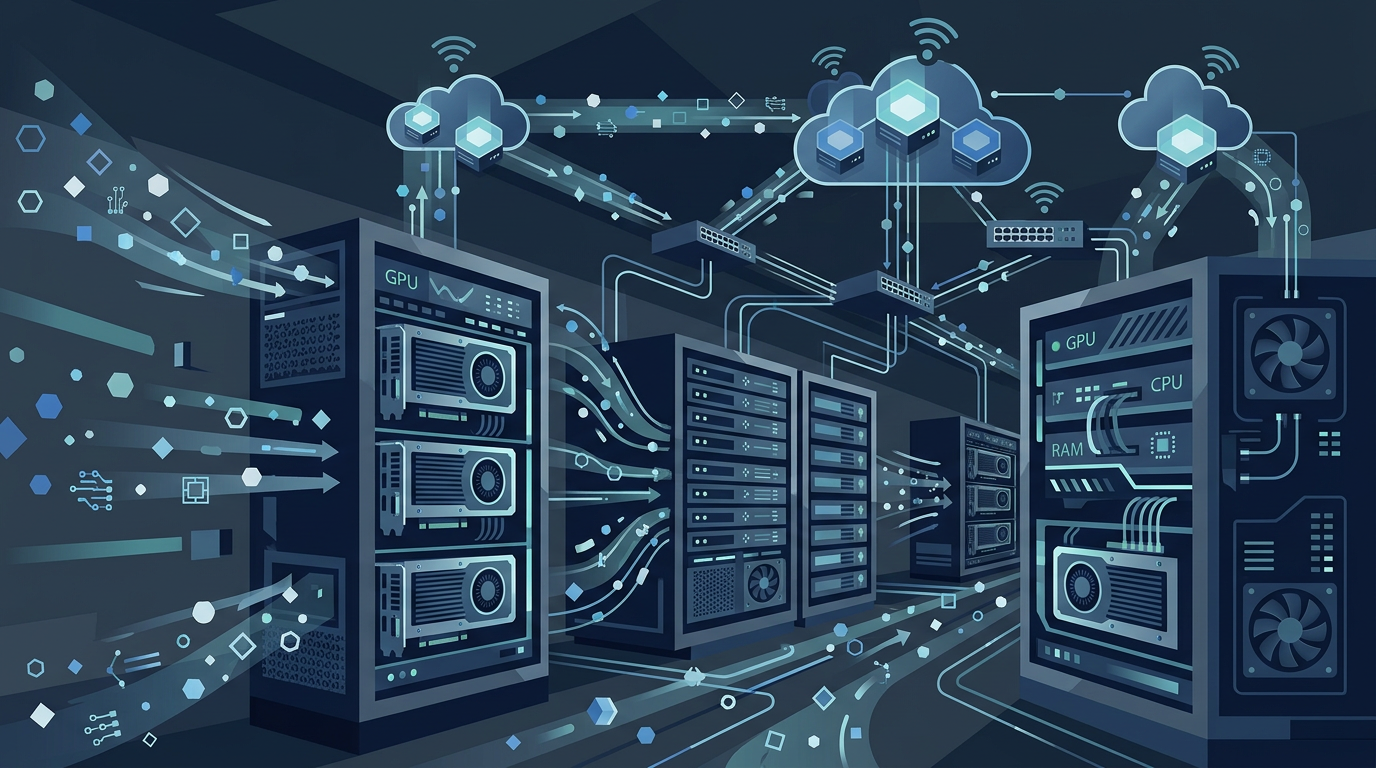
- Production: Your GPU infrastructure manufactures tokens. This includes provisioning decisions, instance types, autoscaling, and energy efficiency. The cost per token starts with how you operate your GPUs.
- Consumption: Model routing, caching, and prompt architecture determine what those tokens actually cost. The same result can cost 10× more if you pick the wrong model for the task.
- Value: Token spend must map to business outcomes. Not all tokens are equal: a token used to generate production code is worth more than one used in an experimental chat.
Why "AI Is Just Another Workload" Is the Most Dangerous Lie
Pooja Kumar, VP CTO Transformation and FinOps at Prudential Financial, said it plainly from the FinOps X stage: "AI is just another workload" is the most dangerous lie a FinOps team can tell itself. The reason is simple: AI has unique economic properties that no other cloud workload shares.
A traditional workload scales in relatively predictable ways. AI — especially LLMs and agentic systems — scales exponentially in hidden costs: call chains, automatic retries, GPU nodes provisioned for full periods even when jobs finish early, and models invoked without checking whether frontier capability is actually needed.
Model Routing: The Next Optimization Frontier
If there's one pattern defining 2026 in AI FinOps, it's intelligent model routing. The idea is straightforward: not every problem requires a frontier model. According to Cast AI data, roughly 85% of development work does not need a frontier model. Only 15% truly benefits from maximum capability.
The problem is that manual routing is unsustainable. Winning teams are letting infrastructure decide which model runs which task. You describe the expected outcome; the system routes, evaluates, and iterates. This brings a key challenge: routing invalidates warm caches. As J.R. noted from Adobe's experience, routing to a cheaper model that invalidates a warm cache can end up costing more than the model you replaced.
Practical Strategies to Implement Tokenomics
- Measure by layer, not by invoice: Implement traceability from silicon (GPU) through to outcome (token), with cost and performance data attached at every architectural decision. Pinterest is already doing this.
- Queue-based GPU autoscaling policies: Don't reserve GPU nodes by time. Scale based on inference queue length and wait times. Reduce idle spend by 30-40%.
- Intelligent multi-model caching: Implement a cache layer that understands prompt semantics, not just exact text. Reuse responses for similar queries and avoid re-invoking frontier models.
- Prompt and agentic chain governance: Set chain depth limits, per-step timeouts, and token budgets per agent session. Without this, a simple query can trigger 20+ downstream calls.
- Per-team/per-product token chargeback: Extend traditional showback/chargeback models to include token consumption. Every team should see the real cost of their model decisions.
The Road Ahead: Tokenomics Foundation as an Industry Standard
The Tokenomics Foundation, announced at FinOps X 2026 as a vendor-neutral entity within the Linux Foundation, will work alongside the FinOps Foundation to establish standard metrics, efficiency benchmarks, and best practices for AI cost management. Mike Eisenstein, Managing Director at Accenture, summarized it on stage: "this is our moment."
For CTOs and infrastructure leaders, the message is clear: the window to build a solid Tokenomics foundation is closing. Teams that wait until AI bills skyrocket before taking action will face hard-to-reverse legacy costs. The question isn't whether you need Tokenomics — it's whether your team will show up with the full-stack answer or just the invoice analysis.